The non-sequential sequel to my paper, Wuthering Heights Is…
Dear reader,
I loved it.
Everything Emerald Fennell changed, she changed. This is the story that sprang from her mind as she remembers experiencing reading.
Good art begets good art.
There is so much baggage inside Brönte’s Wuthering Heights. So much pain and frustration. For the characters. And the readers.
The first time I read Wuthering Heights I threw it across the room.
The second time, I fell apart, into, and through. Brönte heavily inspired my first novel. I wanted to write the girliest fan fiction, and like Fennell, I wanted to do away with everything I wanted to do away with.
Sorry not sorry, but Hindley isn’t necessary, neither are all the children, or the inherited trauma they lug around for pages upon pages. That’s not why we love it. We get that at the time, all of that makes sense. All of that was needed to shape the thing that we love.
Sorry not sorry, Nelly is one hundred percent the villain. When we meet Isabella, we hear her tell Edgar the same of the nurse in Romeo and Juliet. Much tragedy could’ve been avoided in both tales if we had done away with all that stuffy morality.
Sorry not sorry, life moving on past Cathy’s death is boring. Not only that, it’s traumatic, messy, and so damned cruel. Emily was cruel. Wuthering Heights is cruel. Cathy is cruel. Heathcliff is cruel. Hindley is cruel. Joseph is cruel. Nelly is cruel. No one is really likable inside this novel.
For years I would say you’re either a Jane or a Cathy.
And for years, how I desperately wanted to be Cathy.
I’d say things like, I’m Jane on the outside, but Cathy at heart.
Other feminist English majors would tahaha with me.
But did they get what I meant?
I’ve seen the TikToks, the reels of ladies reeling about the inaccuracies, the frippery of it! Wuthering Heights is serious, goddammit. But mostly, they are all crying: This is not the greatest love story ever told!
Indeed. Cathy and Heathcliff are both nuts. They’re crazed, perverse, and sooooo toxic. Unrealistic! Unhealthy! This isn’t the kind of love we—us well-meaning and civic-minded feminists—will be telling our daughters is okay.
No, no, no. Don’t marry Heathcliff, honey. Marry Edgar.
Don’t marry for love.
At least not that kind of love.
Marry for stable love.
Find you the kind of love that will take turns with the baby in the middle of the night.
Heathcliff love? Girl, no. That’s dangerous, that’s if it even texts you back.
I kidddd.
He didn’t text back because he ran to your house in the rain to throw a rock through your window while you pretended to read next to your husband.
The rock is code, see. I will break you, the rock says. Like the eggs in the bed.
This love is not for baby making.
This love is selfish.
To feel this love is to know you’re going to die.
Hahahaha. I’m kidding. I mean that kind of love is a fling, a fantasy, a fond memory. It’s not for serious women. It’s for the crazy women, the girls who need to grow up.
It’s for the teenagers reading Wuthering Heights, fantasizing about Cathy masturbating on the moors, dreaming of Heathcliff finding her, watching her.
Because in every long ass scene where Cathy stares out the window, we know—we knew—that’s what she was thinking.
Fennell just gave it to her. To us.
Cathy and Heathcliff love is maddening, pure madness. It’s the dizzying spell of the Lovers card. It will turn your life completely upside-down.
How many hot takes have we seen where eye roll, can you believe Heathcliff digs up her corpse and embraces her bones? Yeah, so weird, right?
Dear reader,
I don’t find it weird at all.
The way Mary Shelley kept Percy’s heart in her writing desk. How she wrapped it in silk and kept it in her fucking writing desk.
How Jim Morrison’s lover laid on his dead body for days.
How upon Modigliani’s death, his wife threw herself out a window.
Windows.
In the book, Cathy looks out the window to watch the wind violate the moors.
Heathcliff is the wind.
Cathy shoves grass in his mouth.
He’s tasted her now.
In the book, Cathy scratches at Heathcliff’s window. She’s home, let her in.
The book opens and Cathy is already dead. We know their story is fucked.
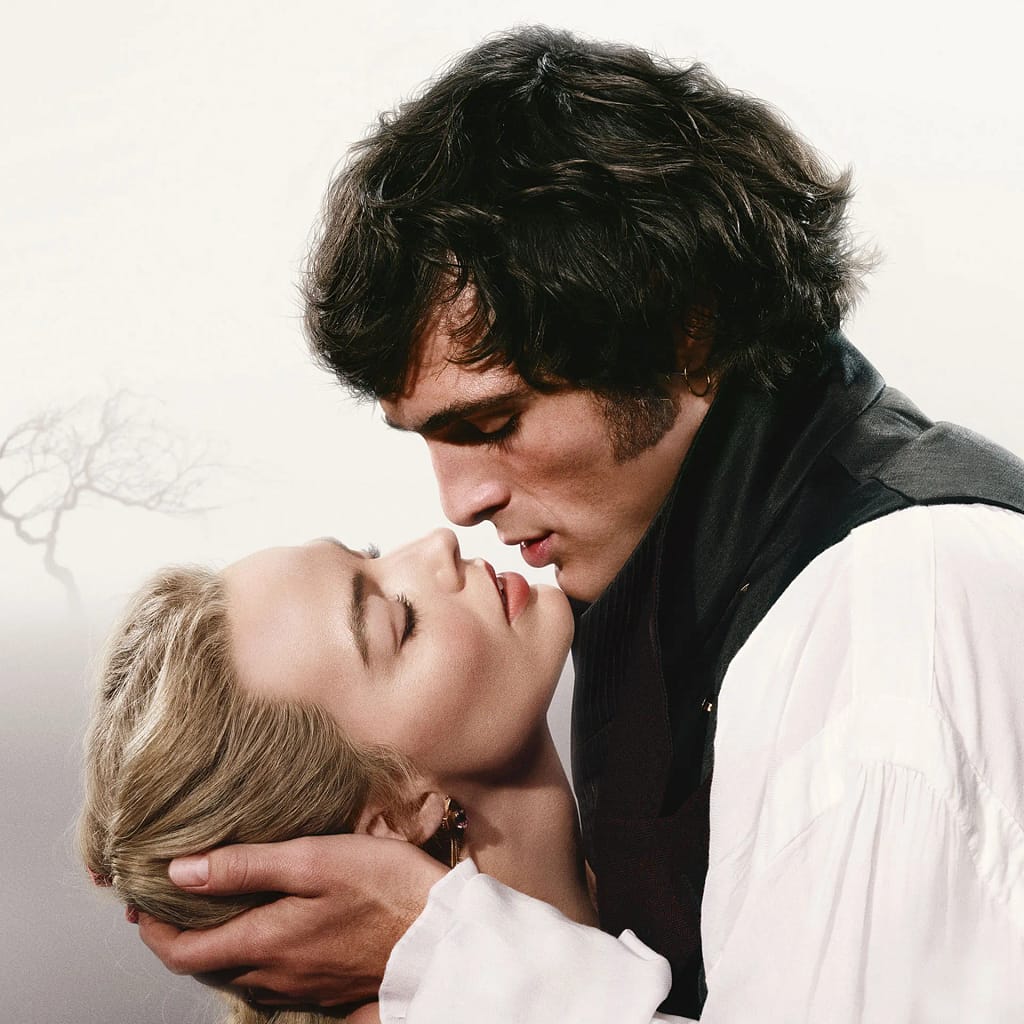
In the film, they fuck like mad everywhere they can.
They fuck like it’s closure for them, for us. For all us grownups who knew they did, who imagined they did.
Fennell filled a hole that I knew I had.
I tried to write my way out of it. Once upon a time.
I tried to write my way back into it.
Again and again and again.
Wuthering Heights told us that love isn’t safe.
Because it’s not fucking safe.
Passion is not safe.
Passion is dangerous.
Shadow daddies are dangerous.
Good guys will sacrifice you for the world.
Bad guys will burn the world to save you.
The Janes of the world do the right thing.
Janes forgive, they nurture, and love so softly, so rightly.
Janes live happily ever after.
Cathys don’t. Cathys burn, they die.
The first time I thought Cathy died in bed because her fire had nowhere to go, so it burned her alive.
But really, of course, even consummated, the fire only blazed brighter, bigger, hotter.
The greatest love story ever told is a love story unto death.
If that’s not your jam, cool. You’re a Jane. I don’t make the rules.
(Oh, wait, I did. This is silly fun. Don’t come at me. Winky face emoji, flaming heart, swords.)
Because no but yeah, “Wuthering Heights” was crazy fun. I cried the whole time. Five stars.